The battlefield has moved overhead. Counter-UAS solutions that protect what matters most — before the threat arrives.
For decades, ground-based security — armoured vehicles, perimeter barriers, ballistic walls — defined protection. That calculus has changed. Consumer-grade drones costing less than ₹50,000 are now weaponised into precision killing machines, carrying warheads, delivering payloads, and conducting surveillance with no warning and no countermeasure in place.
The Russia-Ukraine war demonstrated that drone warfare is no longer the exclusive domain of nation-states. Hezbollah, Houthi rebels, and non-state actors have deployed swarms of loitering munitions against military convoys, oil infrastructure, and populated civilian zones. The technology is accessible, cheap, and increasingly autonomous.
India is not insulated from this threat. As VVIP movements increase, critical infrastructure expands, and border tensions persist, the need for comprehensive counter-UAS (C-UAS) capability is urgent — not theoretical.
Early unmanned aerial vehicles were expensive, fragile, and operated exclusively by superpowers. The US RQ-1 Predator and Israeli IAI Scout were used for battlefield intelligence — surveillance, not attack. Drones were a strategic asset, not a tactical one.
The MQ-9 Reaper and armed Predator variants introduced drone-delivered missile strikes in Afghanistan and Pakistan. These were sophisticated, expensive platforms operated by trained crews — still the exclusive domain of first-world military powers with dedicated satellite link infrastructure.
DJI Phantom and similar commercial quadcopters proliferated globally. ISIS pioneered the use of cheap commercial drones to drop modified 40mm grenades on Iraqi Army positions in Mosul (2016) — marking the first systematic use of off-the-shelf drones as tactical weapons by a non-state actor. The cost of a strike fell from millions to hundreds of dollars.
The Russia-Ukraine conflict became a real-time laboratory for drone warfare at industrial scale. Both sides deploy thousands of FPV kamikaze drones daily, costing as little as $400 each, against tanks, supply lines, and command posts. Iran's Shahed-136 loitering munitions — used by Russia — demonstrated that even poorly-funded actors can deliver precision strikes at strategic range. The age of mass drone warfare has arrived.
Each threat type requires a distinct countermeasure strategy. Passive protection alone is no longer sufficient.
First-Person View drones, guided by a live video feed, carry shaped charges or fragmentation warheads and are flown directly into targets. With no return mission, the entire UAV becomes the weapon. Cost: ₹25,000–₹2 lakh per unit.
Coordinated simultaneous launches of 10–200+ drones designed to overwhelm point defences. While individual drones are small, the saturation of a target zone defeats traditional intercept systems. Even if 80% are neutralised, the remaining 20% still constitute a catastrophic strike.
Often called "suicide drones," loitering munitions — such as Iran's Shahed-136 or Israel's Harop — cruise autonomously to a target zone, circle and surveil at altitude, then engage on command or autonomously. With ranges of 1,000+ km and 8–40 hour endurance, they are strategic precision weapons at tactical cost.
These are not hypothetical scenarios. They are documented incidents that have reshaped military doctrine and civilian security planning globally.
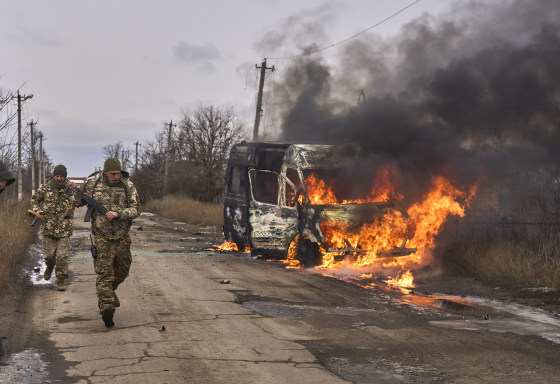
The Russia-Ukraine war is the first conflict where drones have defined battlefield outcomes at scale. Ukraine's Bayraktar TB2 destroyed Russian armoured columns in the early invasion; Russia responded with Iranian Shahed-136 swarms targeting Ukrainian power infrastructure, killing civilians and eliminating 40% of Ukraine's electricity grid in a single winter campaign.
FPV drones — cheap, guided, and carrying shaped charges — now account for more tank kills than any other weapon system. Both armies run drone factories producing thousands of units per month. Command posts, supply convoys, ammunition depots, and even individual soldiers are targeted with precision by ₹30,000 FPV units. No fortification stops them.
In September 2019, Iran-backed Houthi forces launched 18 drones and 7 cruise missiles simultaneously against Saudi Aramco's Abqaiq and Khurais oil facilities — the most critical oil processing infrastructure on the planet. The $2 million drone strike took out 5% of global daily oil supply and caused $30 billion in market losses within 24 hours.
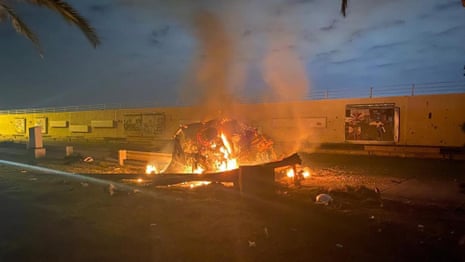
In January 2020, following the assassination of General Qasem Soleimani, Iran launched 16 ballistic missiles at US-held air bases in Iraq — confirming that drones and missiles now constitute Iran's primary deterrent strategy against hardened military targets. The Houthis have since struck civilian airports in Abu Dhabi, Riyadh, and attempted multiple attacks on civilian aircraft departure zones.
The assumption that drone warfare only affects battlefield combatants is dangerously outdated. The targets have changed.
Political leaders and heads of state are high-value targets. A drone carrying 500g of explosive can eliminate an armoured motorcade if it reaches the roof of a vehicle — bypassing all ground-level protection. Venezuela's President Maduro survived a drone assassination attempt in 2018. Indian VVIPs face the same threat envelope.
Established air defence systems are designed for traditional threats — missiles, aircraft. They are largely ineffective against low-flying, slow-moving, radar-cross-section-minimal quadcopters. India's Pathankot airbase was infiltrated by a drone carrying explosives in 2021 — the first drone attack on an Indian military installation.
A single drone near a runway can ground an entire airport. Beyond disruption, weaponised drones targeting fuel facilities, terminal buildings, or parked aircraft represent catastrophic risk. Heathrow (2019), Dubai (2022), and Riyadh (2021) all experienced drone incidents that triggered full shutdowns.
Markets, stadiums, religious gatherings, and public squares are increasingly targeted to maximise psychological impact. The Houthis struck civilian airports and markets across Yemen with Iranian-supplied drones. The ISIS Mosul campaign used drones to drop grenades on civilian evacuation columns — a war crime documented on video.
SMI's counter-UAS infrastructure is designed and manufactured at our Nangloi, Delhi facility — giving government and defence clients the benefit of rapid customisation, local supply chain resilience, and zero import dependency.
Our solutions are tested against real-world drone threat scenarios, not laboratory projections. We work directly with security agencies, NSSG, state police forces, and private sector clients to specify counter-UAS systems that integrate with existing physical security infrastructure.
Discuss a Counter-UAS Deployment